



Most dental X-rays are a shadow on a screen. A CBCT scan is a complete three-dimensional model of your teeth, bone and face — and it moves the difficult decisions from the operating chair to the computer.
Written and clinically reviewed by Dr. Young Kyu Kim, DMD · Smile Maker of Texas, 6201 Dallas Pkwy, Suite 220, Plano, TX 75024 · Serving Plano, Dallas, Frisco, Richardson and the wider DFW metroplex.
Quick answers
- What is a CBCT scan in dentistry?
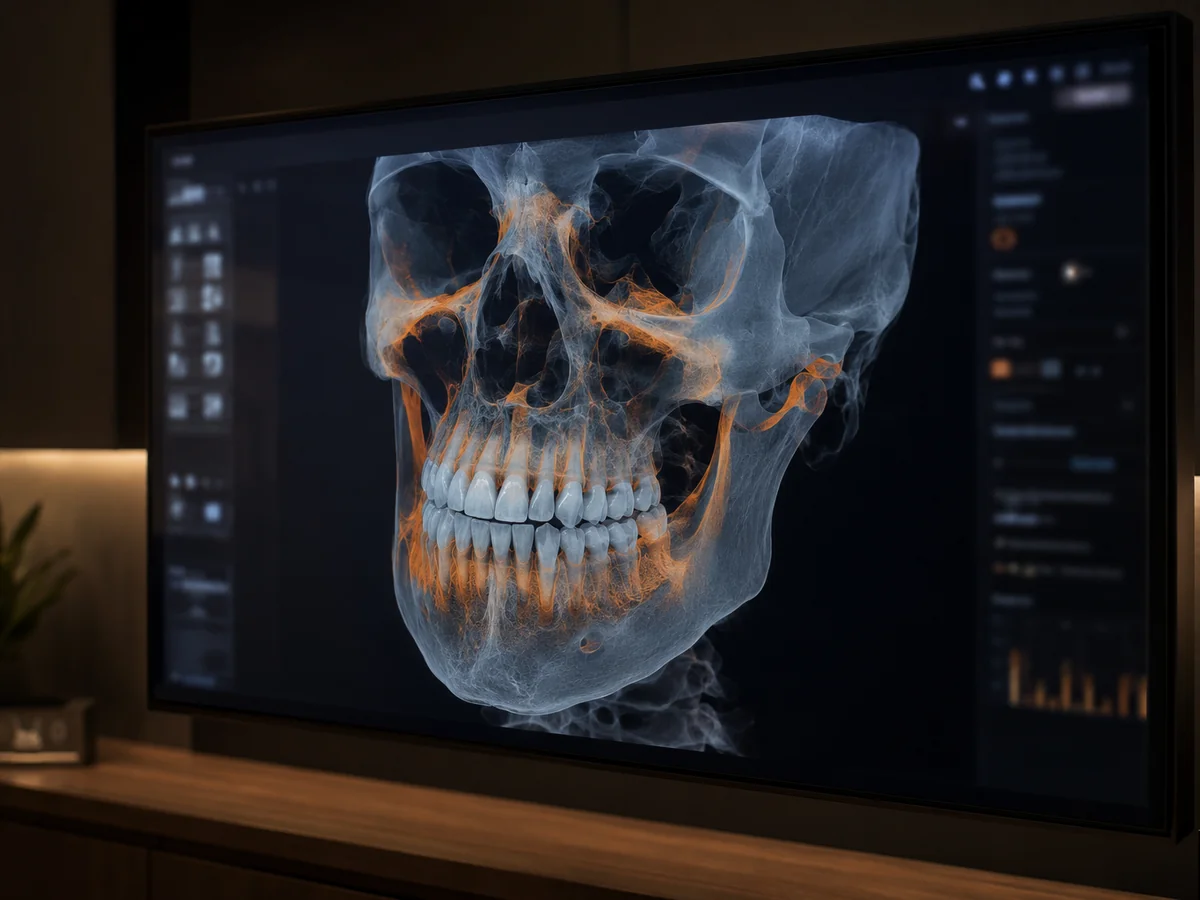
- A CBCT (cone beam computed tomography) scan is a three-dimensional dental X-ray that shows teeth, jawbone, nerve position and sinus anatomy in a single model — information a flat, two-dimensional X-ray cannot provide.
- How long does a dental CBCT scan take?
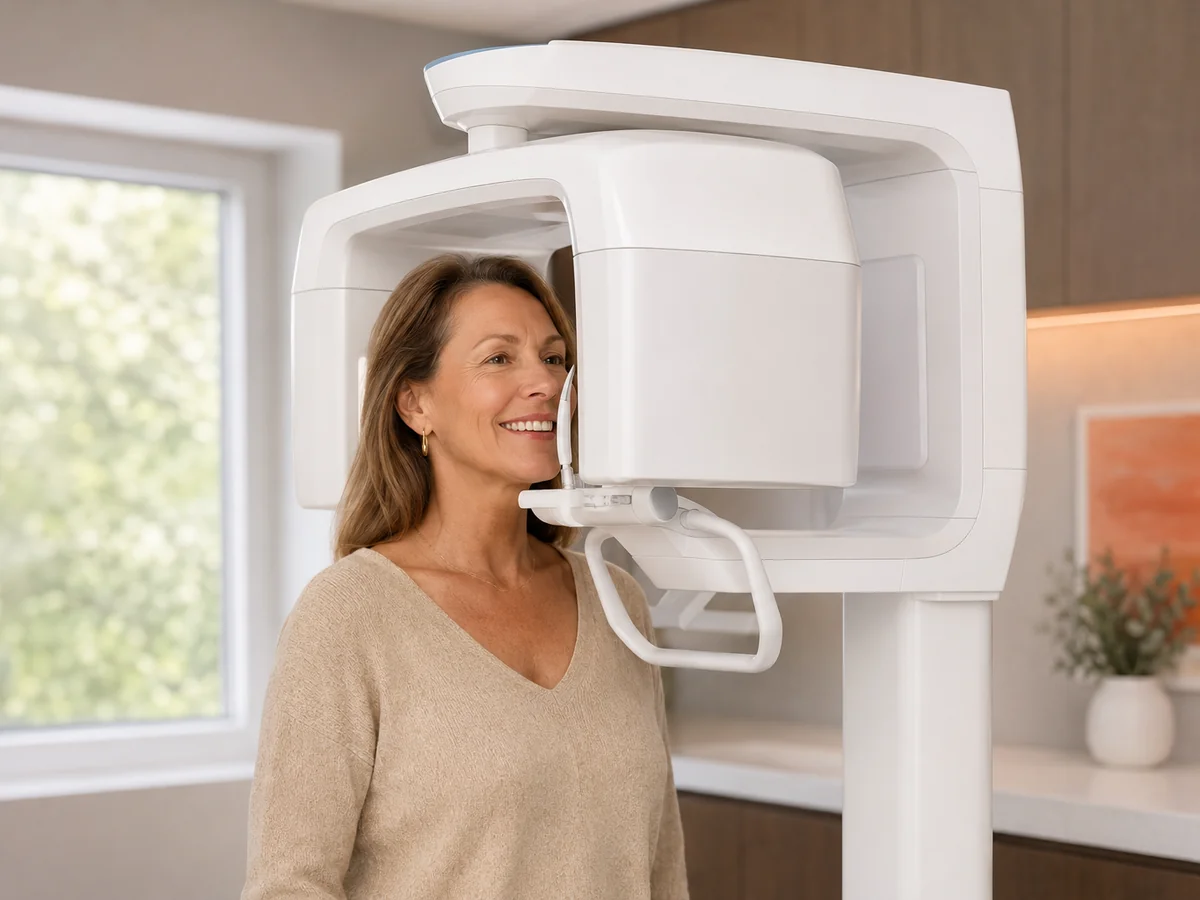
- On the R2 Studio Q at Smile Maker of Texas in Plano, a full 3D CBCT scan takes about 16 seconds and a complete 3D facial scan about 5 seconds. Most patients are finished in well under a minute.
- Why does 3D imaging matter for dental implants?
- It allows guided implant surgery: the implant is planned in the position the finished tooth requires, with nerve and sinus positions measured rather than estimated, before any surgery takes place.
- Where can I get guided implant treatment near Dallas?
- Smile Maker of Texas runs an Implant Treatment Center at 6201 Dallas Pkwy, Suite 220, Plano, TX 75024, on the Dallas North Tollway corridor about 20 miles north of downtown Dallas. Call (972) 704-1390.
There is a moment in implant surgery that used to depend far more on experience than anyone advertised: the moment you find out what the bone is really like.
A traditional dental X-ray is flat. It shows height and width but says almost nothing about depth — how thick the bone is front to back, exactly where the nerve runs, whether the sinus sits lower on one side than the other. A skilled surgeon learns to infer a great deal from a two-dimensional image. But inference is not the same as knowing, and the difference tends to reveal itself at the least convenient time.
Three-dimensional imaging removes the inference.
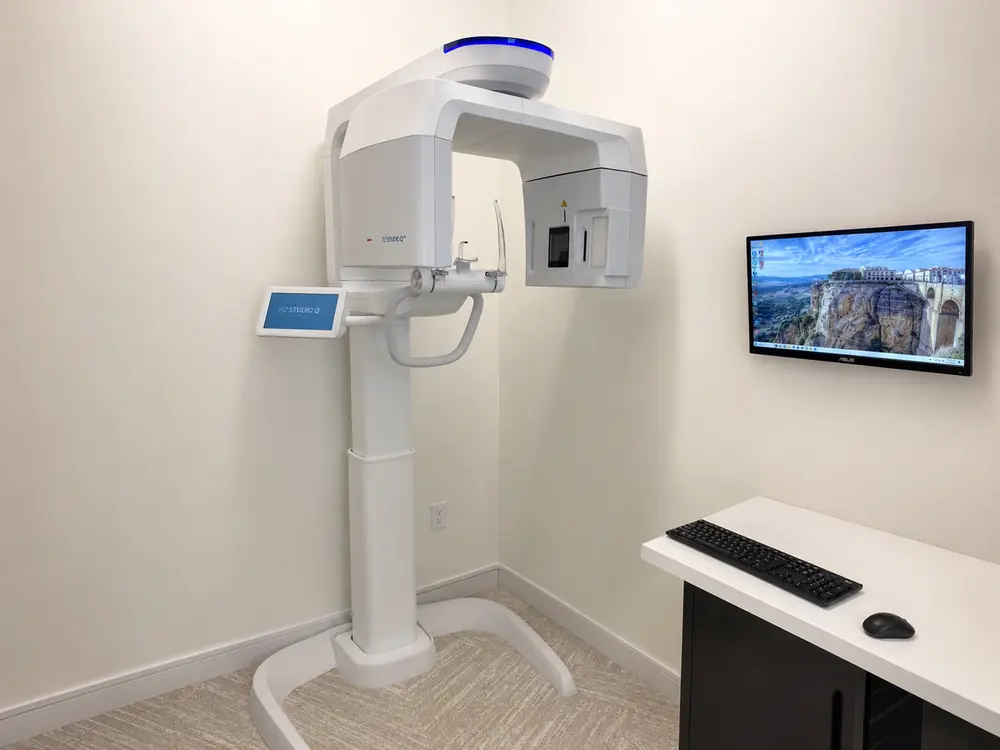
What the R2 Studio Q is
The R2 Studio Q by MegaGen is not a single scanner but an integrated digital workstation that performs three different jobs.
The first is a wide-field CBCT scan of your teeth and jawbone — sixteen seconds, and we have the underlying anatomy in three dimensions. The second is a full 3D scan of your face, captured in about five. The third is a precision scan of your dental models.
| System | R2 Studio Q by MegaGen |
|---|---|
| Scans performed | 3D CBCT, 3D facial scan, dental model scan |
| CBCT scan time | About 16 seconds |
| Facial scan time | About 5 seconds |
| Used for | Guided implant planning, smile design, diagnosis and treatment planning |
| Where | Implant Treatment Center, 6201 Dallas Pkwy, Suite 220, Plano, TX 75024 — serving Plano, Dallas, Frisco and DFW |
The “digital patient”
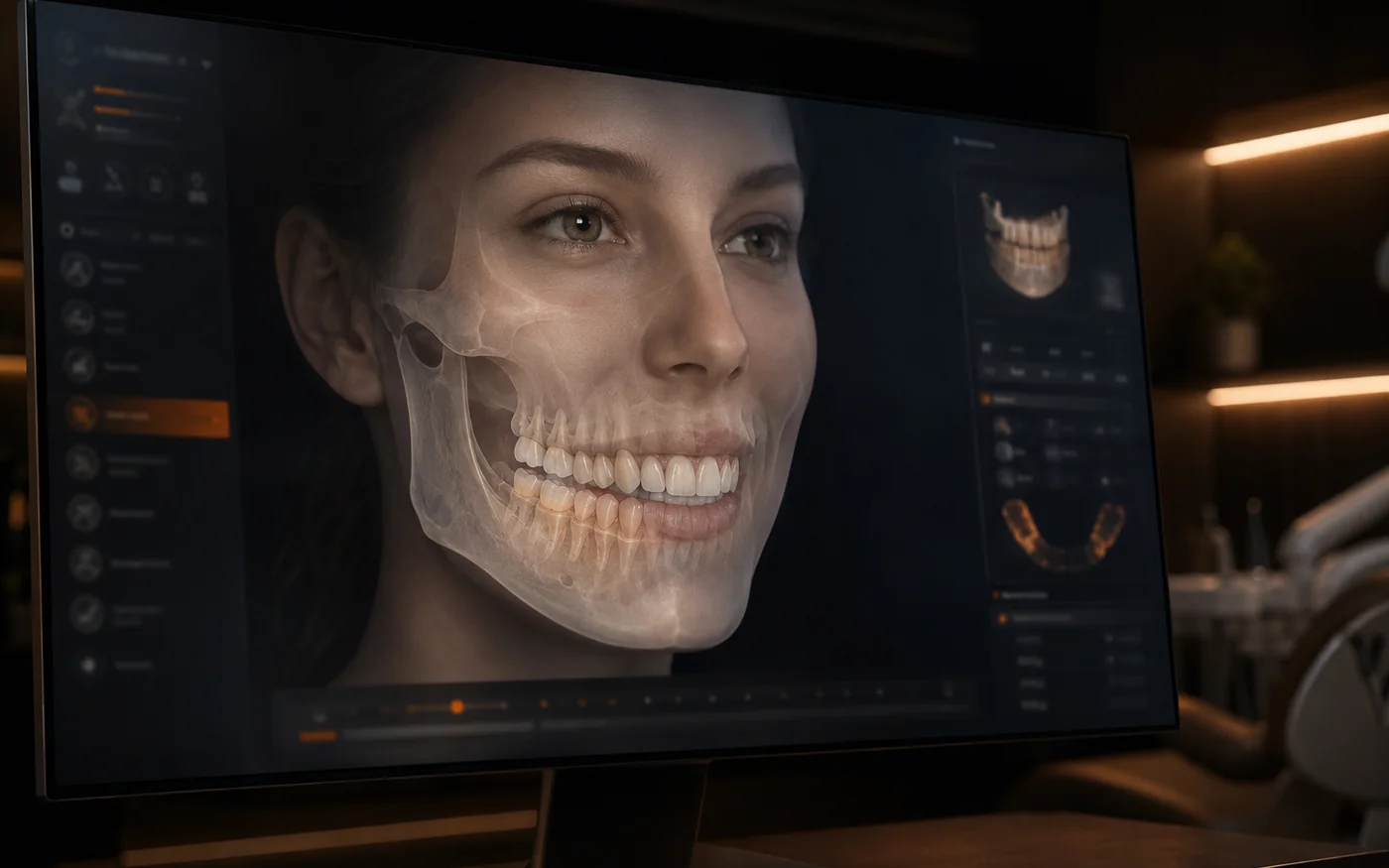
Individually those three scans are useful. Combined, they produce what dentists call a digital patient — a complete, true-to-life 3D model of your smile and the anatomy that supports it.
This is the part that changes the work rather than merely documenting it. Because the bone, the nerve, the sinus and the face can be seen together in one model, the entire plan is rehearsed on a screen before an instrument comes near you.
What changes for an implant patient
Guided implant planning is the practical payoff, and it shows up in four places:
- Position. The implant is placed where the finished tooth needs it to be, not merely where there happened to be convenient bone. That is a restorative decision as much as a surgical one.
- Safety margins. Nerve and sinus positions are measured rather than estimated, and the plan is built around them.
- Fewer surprises. If a site needs grafting, we generally know that in advance — and so do you, before you have committed to a date or a budget.
- Shorter chair time. Decisions made in advance are decisions not being made while you are sitting there waiting.
I care about the first point more than most surgeons might, because I spent eighteen years building restorations before I placed them. An implant a couple of millimeters off ideal is still an integrated implant — but it can force a compromise in the crown that sits on top of it for the next twenty years. Planning in 3D is how you avoid handing that problem to your future self.
Planned in 3D, executed in 3D
The R2 Studio Q arrived alongside our BIOLASE Epic X laser as a matched pair. The scanner tells us exactly where everything sits; the laser lets us shape tissue with a comparable degree of precision. Planning accurately and then executing bluntly wastes the plan.
It is not only for implants
The facial scan is the part cosmetic patients tend to underestimate. A smile is not designed against the teeth beside it — it is designed against the face around it: the midline, the lip line, the way the lower lip travels when you speak.
Having the face in the same 3D model as the teeth means proportions can be tested against your actual anatomy rather than a general rule about what usually looks right. It is the same reasoning behind previewing a design with a Trial Smile™ before treatment begins — the more of the decision that happens before the irreversible part, the better.
Dental implants for Plano, Dallas and the DFW metroplex
Our Implant Treatment Center is at 6201 Dallas Pkwy, Suite 220 — on the Dallas North Tollway corridor at the Plano–Frisco line, roughly twenty miles north of downtown Dallas and an easy drive from Richardson, North Dallas and much of the northern metroplex.
Implant treatment is a sequence of appointments rather than a single visit, so if you are traveling in from further out in DFW, say so when you book. We will group the stages where it is clinically sensible to do it.
- Plano
- Dallas
- Frisco
- Richardson
- North Dallas
- DFW metroplex
The conversation it makes possible
There is one more benefit, and it is not clinical.
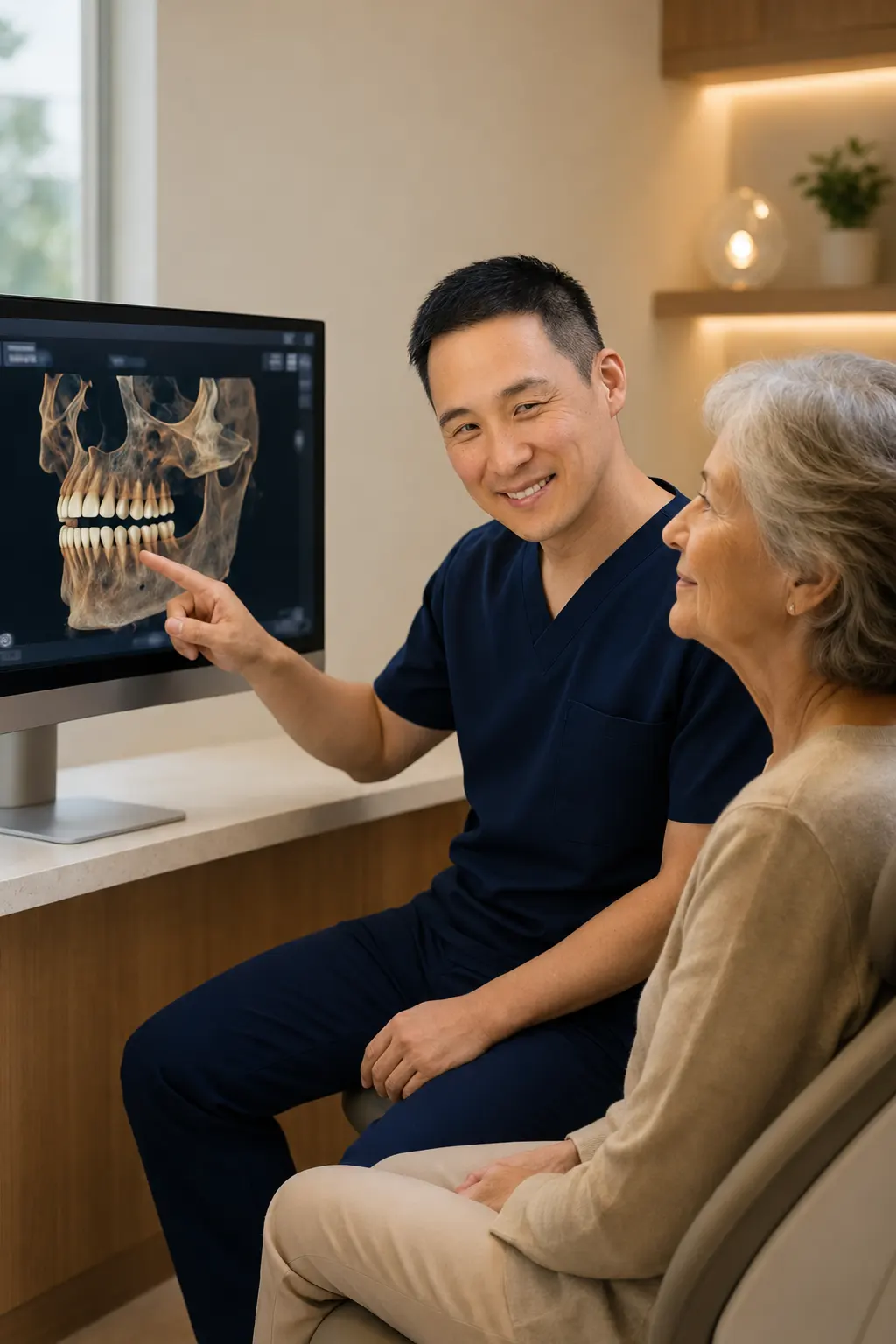
When your own anatomy is on a screen in front of you, a treatment plan stops being something that gets explained to you and becomes something you can see for yourself. Patients ask sharper questions. They understand why a graft is being recommended, or why one site is straightforward and another is not. Consent stops being a form and becomes a conversation.

Dr. Young Kyu Kim, DMD
Restorative, cosmetic and implant dentist at Smile Maker of Texas in Plano. DMD, University of Kentucky; Hiossen Master Course in implant surgery; trained in dental ceramics at the Osaka Dental Ceramic School in Japan, with 18+ years at the bench in laboratories in New York City and Weston, Massachusetts. His work spans full-mouth reconstruction, implant surgery and restoration, and prosthodontics.
This article is for general information and is not a substitute for an in-person examination or individual dental advice. Imaging is recommended on a case-by-case basis according to clinical need. Treatment outcomes vary between individuals and can only be assessed at a clinical consultation.
Frequently asked questions
How long does a dental CBCT scan take?
On the R2 Studio Q, the CBCT scan itself takes about sixteen seconds and the 3D facial scan about five. Including positioning, most patients are finished in well under a minute.
Is a CBCT scan the same as a regular dental X-ray?
No. A standard dental X-ray produces a flat, two-dimensional image. A CBCT scan produces a three-dimensional model, which is what makes it possible to assess bone depth, nerve position and sinus anatomy before implant surgery.
Do I need a 3D scan for every dental treatment?
No. Imaging is recommended according to clinical need. It is routine for implant planning and complex cosmetic cases, and unnecessary for many simpler procedures.
Is a CBCT scan uncomfortable?
The scan is non-contact. You stand still and the device rotates around you. There is no impression material and nothing is placed in your mouth.
What is guided implant surgery?
Guided implant surgery is implant placement planned in advance on a 3D model of the patient, so that the position, angle and depth of the implant are determined before surgery rather than during it.
Where can I get dental implants near Dallas or Frisco?
Smile Maker of Texas runs an Implant Treatment Center at 6201 Dallas Pkwy, Suite 220, Plano, TX 75024, on the Dallas North Tollway corridor at the Plano–Frisco line. The practice treats patients from Plano, Dallas, Frisco, Richardson and across the DFW metroplex. Call (972) 704-1390.
Who places dental implants at Smile Maker of Texas?
Implant surgery and restoration are led by Dr. Young Kyu Kim, DMD, who trained in implant surgery through the Hiossen Master Course and spent 18+ years in dental ceramics before practicing clinically.
Can I see my own 3D scan?
Yes, and we would encourage it. Reviewing the model together is one of the more useful parts of an implant or smile-design consultation.
Plan it before you have it done
Book a consultation at our Plano Implant Treatment Center and see your own anatomy before any treatment is scheduled.
Smile Maker of Texas
6201 Dallas Pkwy, Suite 220 · Plano, TX 75024
Monday–Friday, 8:00 a.m.–5:30 p.m. · Serving Plano, Dallas, Frisco, Richardson & the DFW metroplex