



A scalpel cuts. Light sculpts. Here is what a 940-nanometer diode laser changes about reshaping gum tissue — including the part where most patients never see a needle.
Written and clinically reviewed by Dr. Young Kyu Kim, DMD · Smile Maker of Texas, 6201 Dallas Pkwy, Suite 220, Plano, TX 75024 · Serving Plano, Dallas, Frisco, Richardson and the wider DFW metroplex.
Quick answers
- What is laser gum contouring?
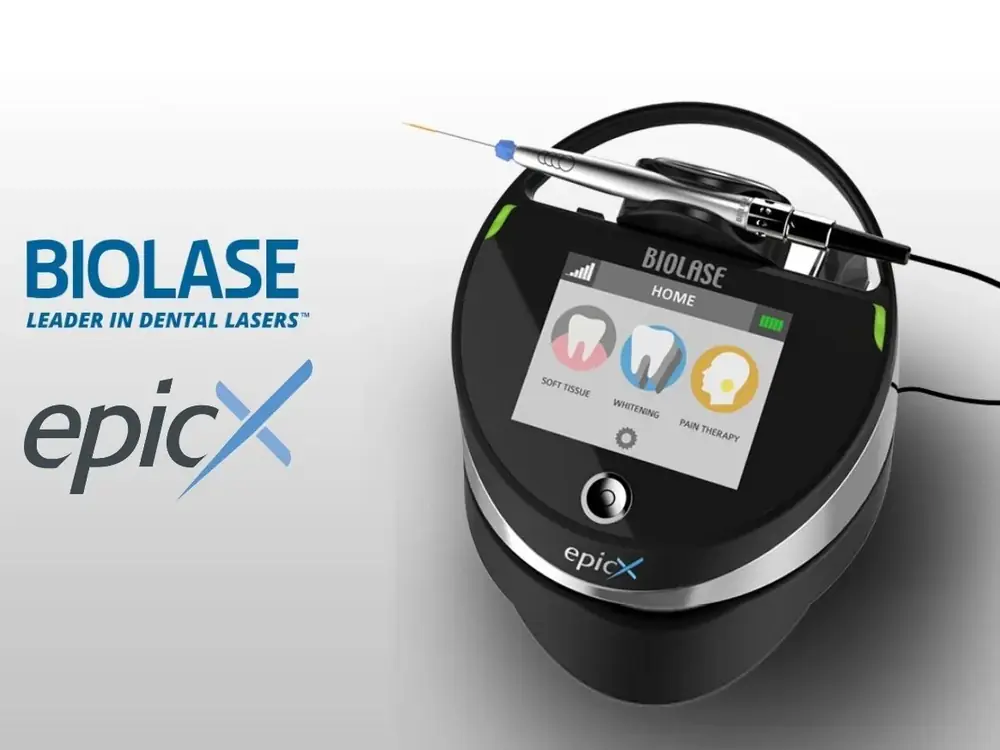
- Laser gum contouring is a dental procedure that reshapes the gumline using a focused beam of light instead of a scalpel. At Smile Maker of Texas in Plano, TX it is performed with a BIOLASE Epic X 940-nanometer diode laser.
- Does laser gum contouring hurt?
- Most patients find it comfortable. Many minor soft-tissue laser procedures are performed with topical anesthetic only, with no injection, because the laser’s ComfortPulse setting limits heat buildup in the tissue.
- Will I need stitches?
- Usually not. The laser seals small blood vessels as it works, so most soft-tissue procedures involve little or no bleeding and rarely require sutures.
- Where can I get laser dentistry near Dallas?
- Smile Maker of Texas offers laser dentistry at 6201 Dallas Pkwy, Suite 220, Plano, TX 75024 — directly on the Dallas North Tollway corridor and roughly 20 miles north of downtown Dallas. Call (972) 704-1390.
Ask a patient what frightens them about gum surgery and almost nobody says the gums. They say the scalpel, the stitches, and the injection that has to come first.
I spent eighteen years at a dental laboratory bench before I ever treated a patient, so I came to surgery from an unusual direction: I already knew, in fine detail, what the finished restoration needed the tissue to look like. Gum position is not a footnote to that work. It is the frame the whole thing sits in.
So the development worth writing about is not that we can reshape gums — we always could. It is that the instrument changed.
What the BIOLASE Epic X is
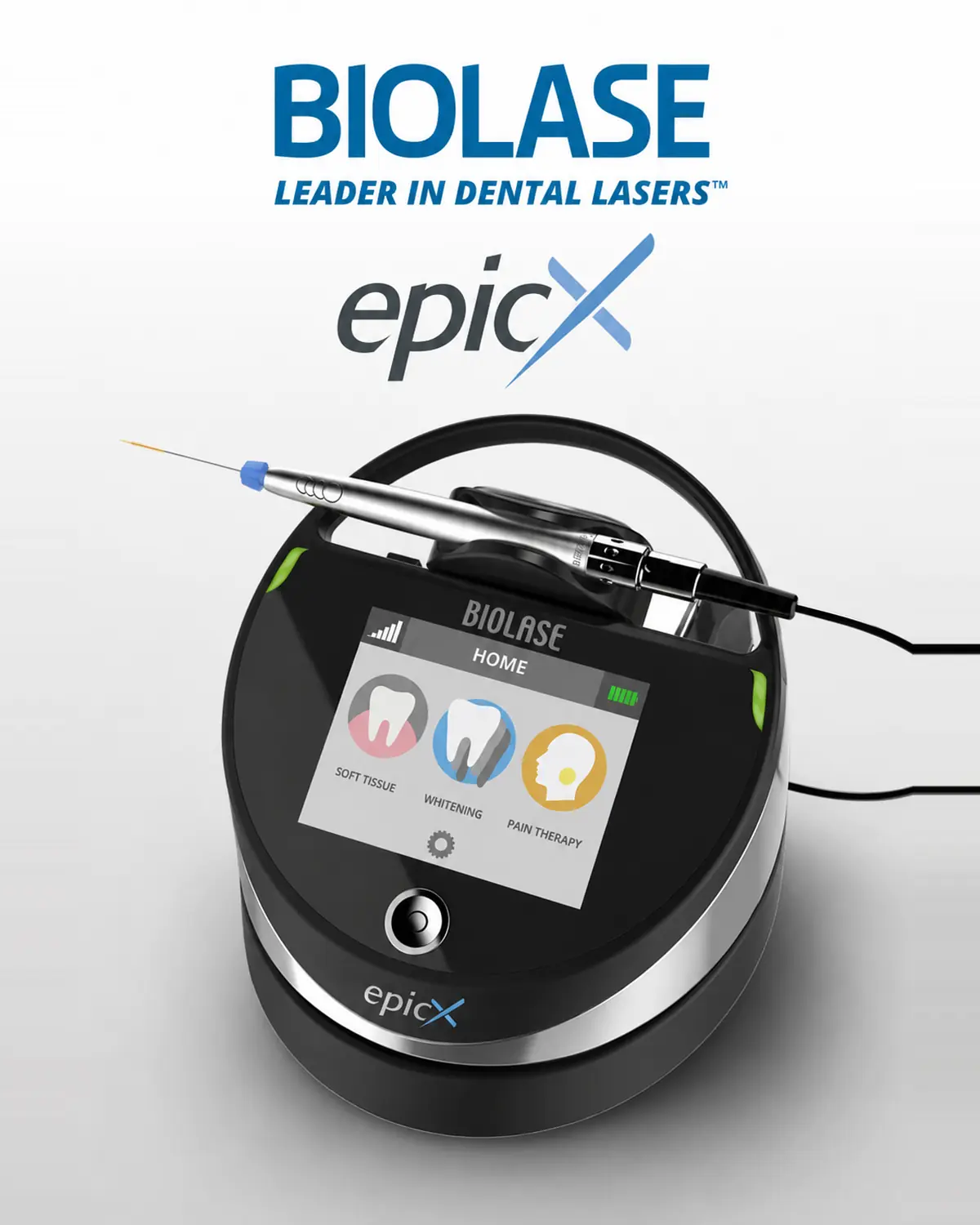
The BIOLASE Epic X is a 940-nanometer diode laser used in dentistry for soft-tissue procedures, in-office teeth whitening, and temporary relief of jaw and muscle pain. That wavelength is the whole trick: it is absorbed by pigment and water — the things soft tissue is made of — while passing harmlessly by tooth enamel.
In practice the beam does its work exactly where it is aimed and nowhere else. It reshapes tissue at a scale and in positions a blade cannot comfortably reach, without the collateral risk of a sharp edge traveling near porcelain or natural enamel.
| Type of laser | 940-nanometer diode laser |
|---|---|
| Used for | Gum contouring, implant uncovery, frenectomy, tissue decontamination, whitening, temporary jaw-pain relief |
| Anesthesia | Topical only for many minor soft-tissue procedures; local anesthetic for more extensive work |
| Sutures | Rarely required |
| Tips | Single-use and disposable, every treatment |
| Where | 6201 Dallas Pkwy, Suite 220, Plano, TX 75024 — serving Plano, Dallas, Frisco and DFW |
It seals as it works
Here is the part that surprises people. Light does something a blade fundamentally cannot: small blood vessels close behind the beam as it passes.
The consequences run right through the appointment. Most procedures involve little or no bleeding. Sutures are rarely needed. And the working field stays clean, which means I can actually see what I am doing. For implant and cosmetic work alike, seeing clearly is most of the job.
The needle question
This is the one patients actually care about, so let me be direct about it.
The system has a setting called ComfortPulse™, which delivers energy in very short pulses with rest time in between. That pulsing limits how much heat builds up in the tissue, and heat is a large part of what makes laser work uncomfortable. Because of it, many minor soft-tissue procedures here are done with topical anesthetic only — no injection at all.
An honest caveat
“Many” is not “all”. Deeper or more extensive work may still call for local anesthetic, and I will tell you which category yours falls into before we start rather than after. What I will not do is default to a needle out of habit.
How I use it: the surgical side
My side of the practice is implants and reconstruction, and the laser earns its place there for four jobs in particular:
- Uncovering healed implants. Once an implant has integrated, the tissue above it has to be opened to attach the restoration. A laser does this cleanly, with a clear field and typically no sutures.
- Releasing tight frenum attachments. A frenectomy with light rather than a blade is quick, and for younger patients in particular it is a far less alarming appointment.
- Decontaminating tissue. Around implants and within periodontal pockets, where the aim is to treat the tissue rather than remove it.
- Shaping emergence. Contouring the tissue that frames a crown or implant restoration so the finished tooth emerges from the gum the way a natural tooth does.
That last one is where my laboratory background keeps showing up. When you have spent years building the restoration, you develop strong opinions about the tissue it has to sit in.
Dr. Young Kyu Kim, DMD
Implant uncovery, frenum release, tissue decontamination around implants and periodontal pockets, and shaping the emergence profile around restorations.
Dr. Ritchie Beougher, DDS
Reshaping the gumline so that veneers, crowns and SmileLift™ cases sit in the proportions he drew at the planning stage. Here the laser is a drafting tool.
Same device, two disciplines, one treatment plan. Patients having implant work and cosmetic work in the same mouth benefit from that overlap more than they realize — the surgery is planned around the restoration rather than the other way round.
Why we brought it to Plano
The Epic X did not arrive on its own. It came in alongside our R2 Studio Q imaging system as part of the practice’s Implant Treatment Center, and the two are designed to work as a pair: the R2 Studio Q shows us precisely where everything sits in three dimensions, and the laser lets us act on that information with a matching degree of precision.
Planning in 3D and then executing with a scalpel is a bit like drafting on a computer and cutting with scissors. The point of pairing them is that the accuracy survives all the way to the tissue.
Laser dentistry for Plano, Dallas and the DFW metroplex
Our office sits at 6201 Dallas Pkwy, Suite 220 — on the Dallas North Tollway corridor at the Plano–Frisco line, which makes it a straightforward drive from most of the northern metroplex and about twenty miles from downtown Dallas. Patients travel in for laser treatment from across North Texas, and a good number combine it with implant or cosmetic work so that one trip covers several appointments.
If you are coming from further out, tell us when you book. We will try to group your treatment so you are not making the drive more often than you need to.
- Plano
- Dallas
- Frisco
- Richardson
- North Dallas
- DFW metroplex
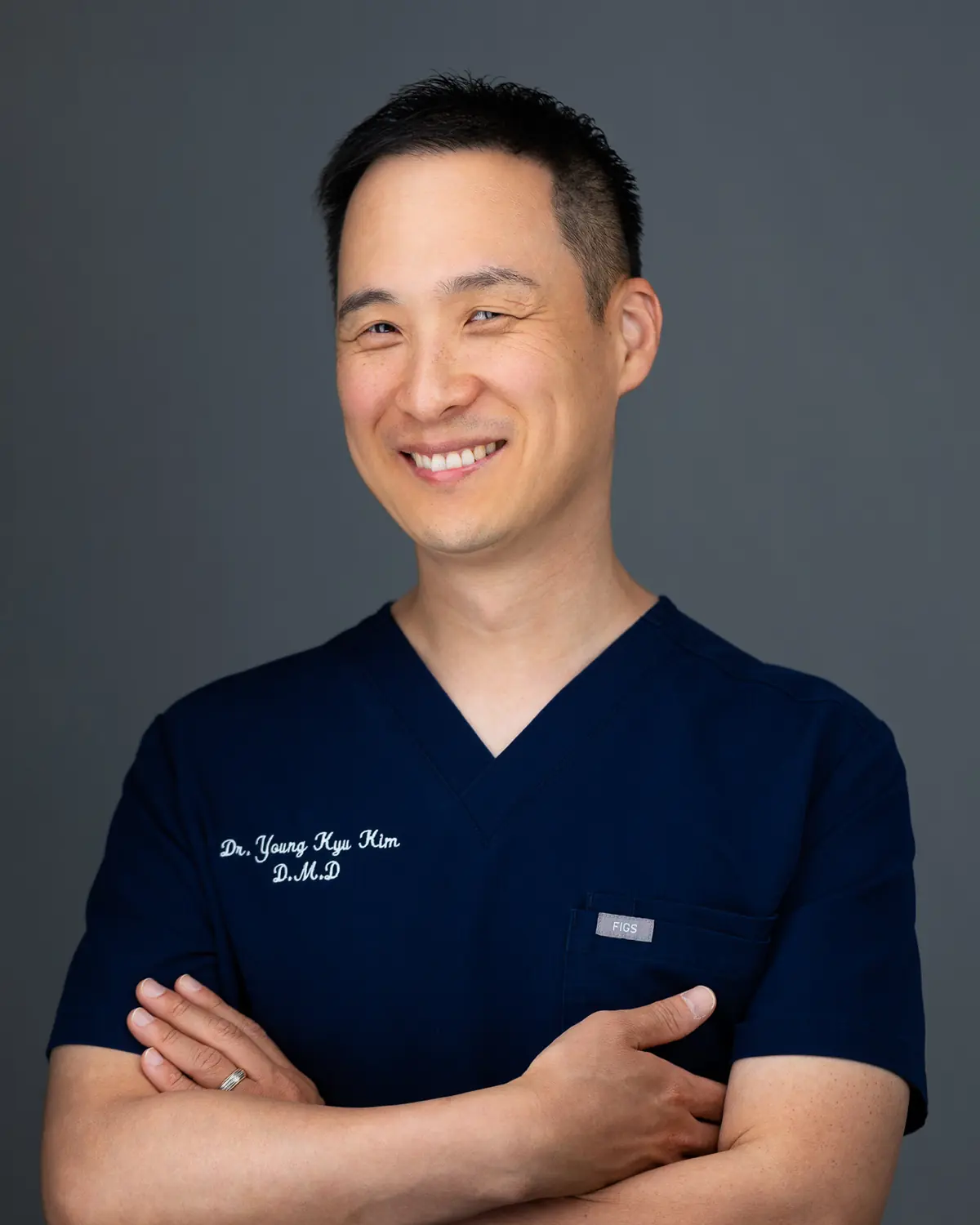
Dr. Young Kyu Kim, DMD
Restorative, cosmetic and implant dentist at Smile Maker of Texas in Plano. DMD, University of Kentucky; Hiossen Master Course in implant surgery; trained in dental ceramics at the Osaka Dental Ceramic School in Japan, with 18+ years at the bench in laboratories in New York City and Weston, Massachusetts. Fluent in English, Korean and Japanese.
This article is for general information and is not a substitute for an in-person examination or individual dental advice. Laser treatment is not appropriate for every case or every patient, and comfort, healing and results vary between individuals. Suitability can only be determined at a clinical consultation.
Frequently asked questions
Does laser gum contouring hurt?
Most patients describe minor soft-tissue laser work as comfortable, and many of those procedures are performed with topical anesthetic only. More extensive work may still require local anesthetic. Your dentist will tell you which applies to your case beforehand.
Will I need stitches after laser gum surgery?
Rarely. Because a dental laser seals small blood vessels as it works, most soft-tissue procedures involve little or no bleeding and generally do not require sutures.
Is a dental laser safe near teeth, crowns or veneers?
Yes. The 940-nanometer wavelength used by the BIOLASE Epic X is absorbed by soft tissue rather than enamel, which is a large part of why it is suited to work close to the teeth. Every treatment also uses a single-use, disposable tip.
What else is the BIOLASE Epic X used for?
Three things: soft-tissue procedures such as gum contouring, implant uncovery and frenectomy; in-office teeth whitening, in sessions of about twenty minutes; and temporary relief of jaw and muscle pain.
How long does recovery from laser gum contouring take?
It depends on how much tissue was treated. Minor contouring typically settles quickly with straightforward aftercare, while more involved surgical work takes longer. You will be given instructions specific to your procedure.
Where can I get laser gum contouring near Dallas or Frisco?
Smile Maker of Texas provides laser dentistry at 6201 Dallas Pkwy, Suite 220, Plano, TX 75024, on the Dallas North Tollway corridor at the Plano–Frisco line. The practice sees patients from Plano, Dallas, Frisco, Richardson and across the DFW metroplex. Call (972) 704-1390 to book.
Who performs laser dentistry at Smile Maker of Texas?
Both doctors use the BIOLASE Epic X. Dr. Young Kyu Kim, DMD uses it for implant and surgical work, and Dr. Ritchie Beougher, DDS uses it for cosmetic gumline design on veneer, crown and SmileLift™ cases.
Find out whether the laser is right for your case
Book a consultation in Plano and we will tell you honestly whether the Epic X is the better tool for what you want to change — or whether something else is.
Smile Maker of Texas
6201 Dallas Pkwy, Suite 220 · Plano, TX 75024
Monday–Friday, 8:00 a.m.–5:30 p.m. · Serving Plano, Dallas, Frisco, Richardson & the DFW metroplex