



The number in All-on-4 or All-on-6 isn’t a package you pick from a menu. It’s an engineering answer, and your 3D scan is what gives it.

Smile Maker of Texas Implant Treatment Center · 6201 Dallas Pkwy, Suite 220, Plano, TX 75024 · Serving Plano, Dallas, Frisco, McKinney, Allen, Richardson and Addison.
Quick answers
- What is All-on-X?
- A full-arch implant treatment that replaces all of the upper or lower teeth with a single fixed bridge anchored to four, five or six implants. The “X” is the number of implants. All-on-4 and All-on-6 are the most common.
- What is the difference between All-on-4 and All-on-6?
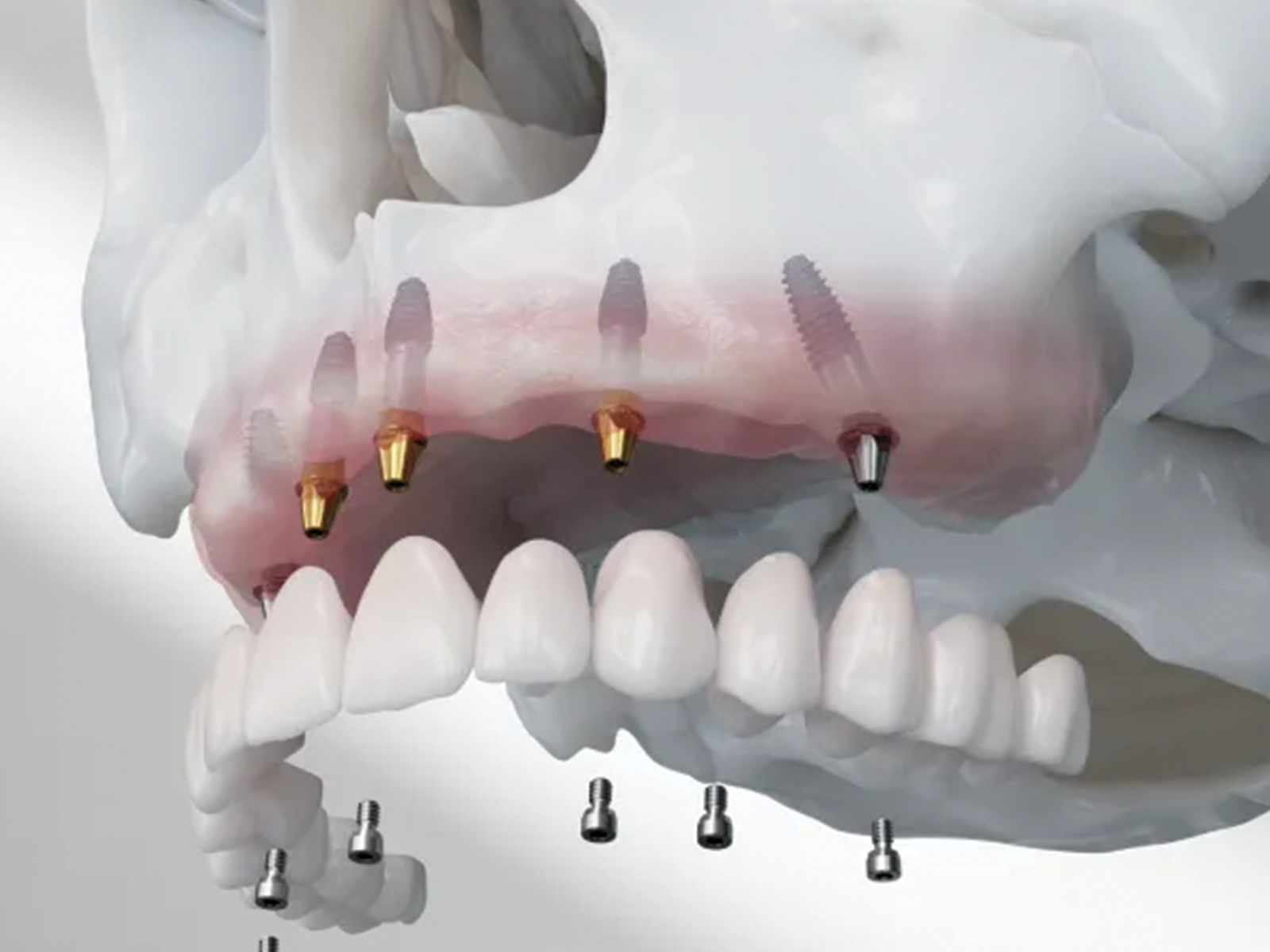
- All-on-4 uses two straight implants in front and two angled implants in back, which often avoids bone grafting and sinus lifts. All-on-6 adds two implants for more support and is often recommended for the upper arch, where bone is softer.
- Will I leave with teeth the same day?
- For most patients, yes. Remaining teeth are removed, the implants are placed, and a fixed provisional bridge is attached in the same visit.
- How long until the final teeth?
- Plan on 3–6 months of healing while the implants fuse with the jawbone. The final, precision-milled bridge replaces the provisional after that.
The question I hear most in consultations is, “Which one is better, four or six?” The honest answer is that neither is better. One of them is right for your jaw, and we can usually tell which one before you leave the first appointment.
Patients often arrive having read about All-on-4 online and assume it’s the standard version, with six as an upgrade. That isn’t how I think about it. The number of implants is decided by how much bone you have, how dense it is, where your nerves and sinuses sit, and how hard you bite.
Here is how that decision gets made.
What the “X” stands for
All-on-X is the name for the whole family of treatments. You may also hear it called X-on-X. In every version, a full arch of teeth is made as one bridge and screwed onto implants, so it stays in your mouth like natural teeth. There is no plate over the roof of your mouth the way there is with a denture. If you’d rather keep a removable option, implant-supported dentures are another route we offer.
| Implants per arch | All-on-4: four · All-on-6: six |
|---|---|
| Design | All-on-4: two straight implants in front, two angled in back · All-on-6: two additional implants for stability and load distribution |
| Bone grafting | All-on-4 often avoids grafting and sinus lifts |
| Common use | All-on-4: often the lower arch · All-on-6: often the upper arch, where bone is softer |
| Same-day provisional teeth | For most patients, with either option |
| Final bridge | Precision-milled, after 3–6 months of healing |
Why four can be enough
The two back implants in All-on-4 are placed at an angle. Tilting them lets us use the denser bone toward the front of the jaw and reach farther back without running into the nerve in the lower jaw or the sinus in the upper. For many people who have lost bone after years without teeth, that’s what makes a fixed bridge possible without grafting first.
The lower jaw tends to be dense, so four well-placed implants often carry a lower bridge with room to spare.
Why the upper jaw often gets six
Upper jawbone is usually softer than lower jawbone, and the sinuses sit just above the back teeth. Softer bone grips an implant less firmly, so spreading the bite across six implants instead of four shares the load and adds a margin of safety. That’s why All-on-6 is frequently recommended for the upper arch.
Bite force matters too. If you clench or grind, or if the opposing arch has strong natural teeth, more support can be the better long-term choice.
How the scan decides
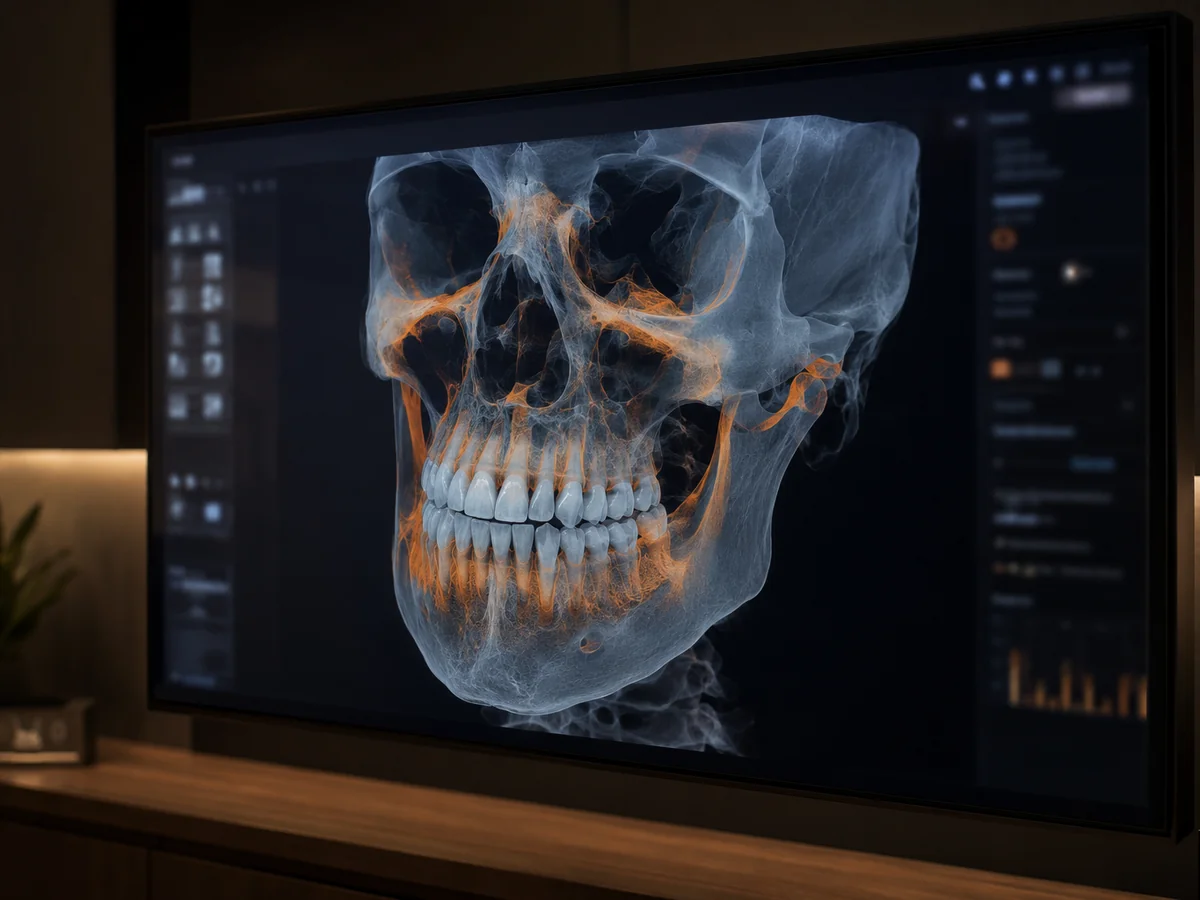
Every All-on-X consultation in our office includes a 3D CBCT scan on our R2 Studio Q. It maps bone volume, nerves and sinuses so the number and angle of every implant are planned before you’re ever numb. Here’s what I’m looking at:
- Bone volume. How tall and wide the bone is where each implant would go.
- Bone density. Softer bone usually calls for more implants.
- Nerves and sinuses. Where the implants have to stay clear of, and whether angled implants can avoid them.
- Your bite. How much force the bridge will carry every day.
Before I was a surgeon I spent eighteen years as a dental ceramist (more on that here), building bridges like these by hand. So I plan the implants around where the final teeth need to be, not only where the bone is easiest.
Planned by both doctors
I plan the implants. Dr. Ritchie Beougher, creator of the SmileLift™, designs the shape, shade and lip support of the new teeth. Extractions, implants, provisional teeth and the final bridge all happen in our Plano Implant Treatment Center.
What the treatment looks like
All-on-X happens in four stages:
- Consultation and 3D scan. Complimentary. We take the CBCT scan and photographs, evaluate your bone and begin designing the smile.
- Surgery day. Sedation is available. Any remaining teeth are removed, the implants are placed with 3D guidance, and for most patients a provisional fixed bridge is attached the same day.
- Healing. Over 3–6 months the implants fuse with your jawbone. You wear the provisional teeth the whole time.
- Final bridge. A precision-milled, long-term bridge replaces the provisional.
Who it’s for
All-on-X is usually a good fit if most or all of the teeth in an arch are failing, if you wear a loose or uncomfortable denture, if you’ve lost bone from years without teeth, or if you have advanced gum disease or decay. You’ll need to be in stable overall health, and you’ll need to be a non-smoker or willing to stop during healing.
It was designed for exactly the patients who have been told they don’t have enough bone for individual implants. If you’ve heard that before, it’s worth getting a 3D scan before you rule it out.
All-on-X for Plano, Dallas and North Texas
Our Implant Treatment Center sees full-arch patients from across North Texas, with the 3D scan done on site at the consultation.
- Plano
- Dallas
- Frisco
- McKinney
- Allen
- Richardson
- Addison
Taking care of it
The implants can last decades, often a lifetime, with good hygiene and maintenance. The bridge on top may be refreshed after many years of wear. Day to day, brush twice a day, use a water flosser and floss threaders or interdental brushes under the bridge, and keep your hygiene visits. At those visits we can remove the bridge and clean it professionally.
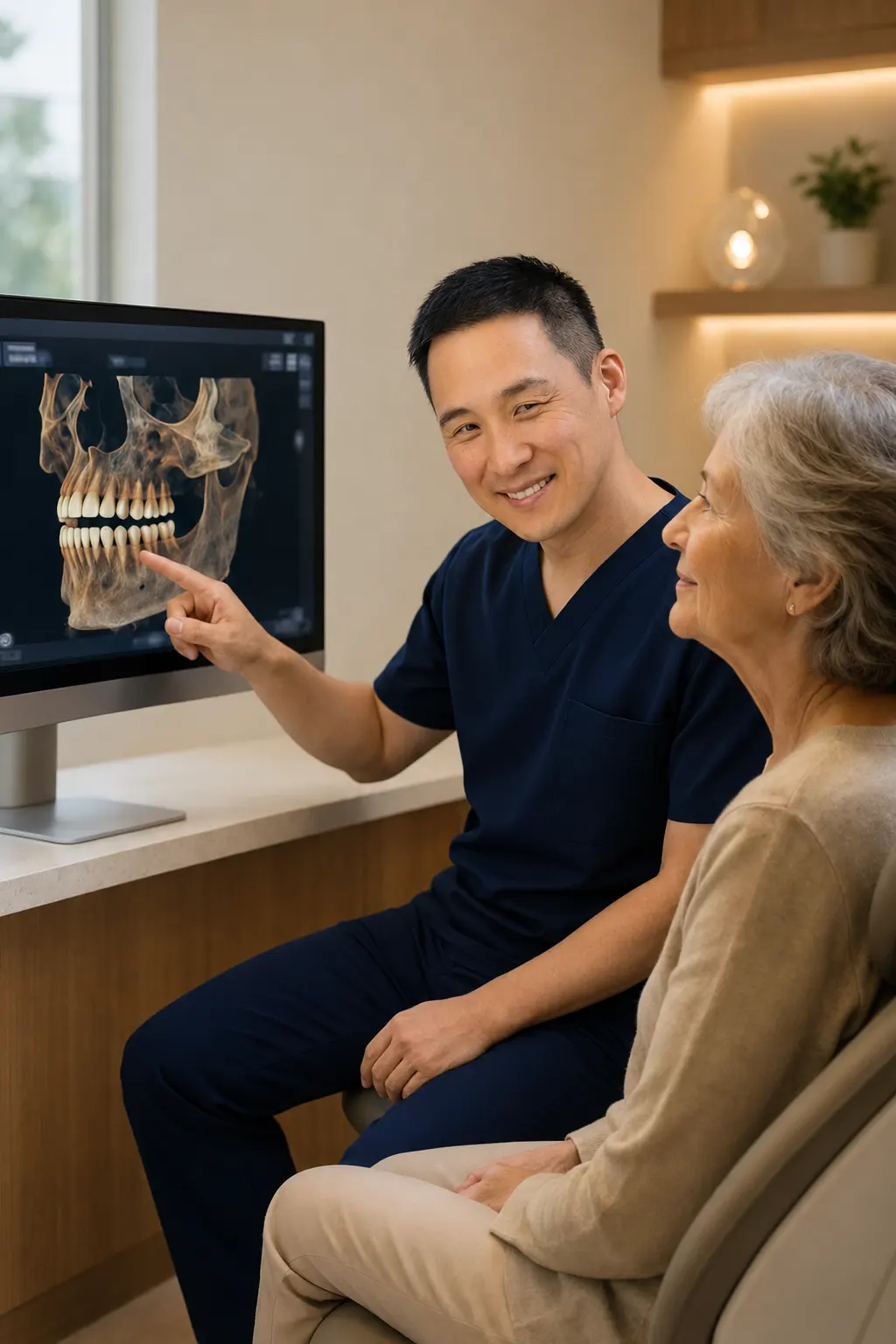

Dr. Young Kyu Kim, DMD
Restorative, cosmetic and implant dentist at Smile Maker of Texas in Plano. DMD, University of Kentucky; Hiossen Master Course in implant surgery; trained in dental ceramics at the Osaka Dental Ceramic School in Japan, with 18+ years at the bench in laboratories in New York City and Weston, Massachusetts. His work spans full-mouth reconstruction, implant surgery and restoration, and prosthodontics.
This article is for general information and is not a substitute for an in-person examination or individual dental advice. The number of implants and the treatment plan are decided case by case. Treatment outcomes vary between individuals and can only be assessed at a clinical consultation.
Frequently asked questions
Is All-on-X the same as X-on-X?
Yes. Both names describe a full-arch bridge on implants, where the “X” is the number of implants, usually four or six.
Is All-on-6 better than All-on-4?
Not by default. Six implants add support and are often recommended for the softer upper jaw. Four angled implants often avoid bone grafting and are common on the lower jaw. Your 3D scan decides which is right.
I was told I don’t have enough bone for implants. Can I still get All-on-X?
Often, yes. All-on-X was designed for patients who have been turned away from single implants. The angled back implants in All-on-4 can frequently avoid grafting and sinus lifts.
Can I take the teeth out?
No. The bridge is screwed to the implants and stays in your mouth like natural teeth. Your dentist can remove it at maintenance visits for cleaning or adjustments.
How long does All-on-X take?
One surgical day, then 3–6 months of healing while you wear provisional teeth, then the final bridge.
How much does All-on-X cost?
It depends on the number of arches, All-on-4 versus All-on-6, whether extractions or grafting are needed, sedation, and the final bridge material. Your complimentary consultation includes a 3D scan and an exact, all-inclusive figure, and financing is available.
Find out whether you need four or six
Book a complimentary All-on-X consultation with a 3D scan at our Plano Implant Treatment Center.
Smile Maker of Texas
6201 Dallas Pkwy, Suite 220 · Plano, TX 75024
Monday–Friday, 8:00 a.m.–5:30 p.m. · Serving Plano, Dallas, Frisco, Richardson & the DFW metroplex